
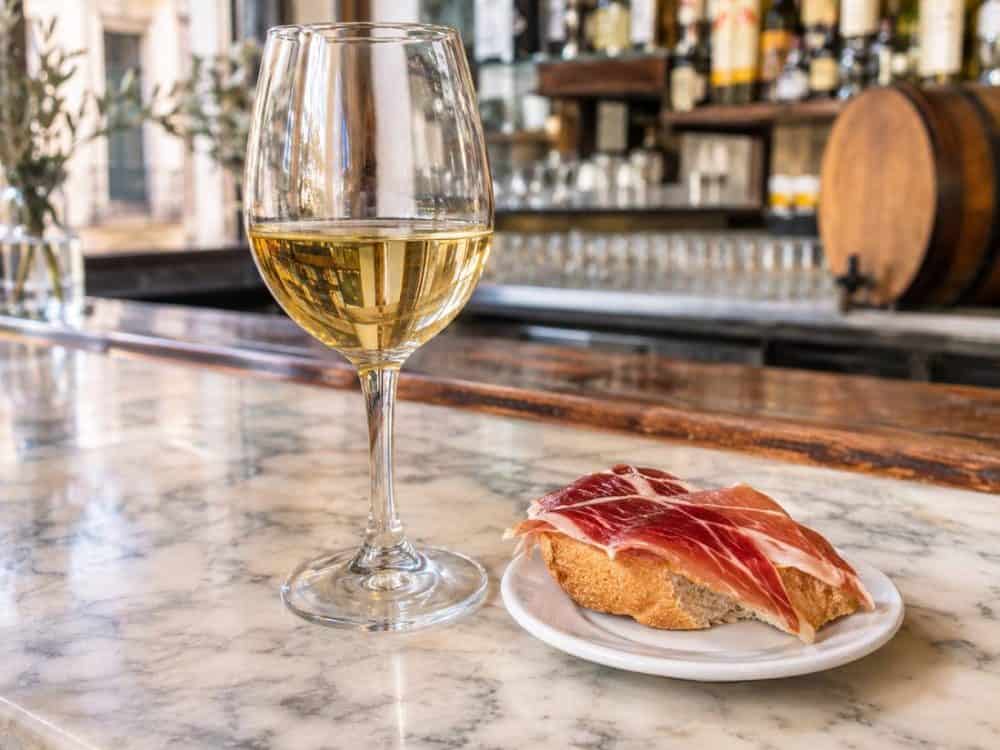
In short: Tapas food is the Spanish habit of eating small plates with a drink. The word tapa means “lid” or “cover”, from the verb tapar, and the most common story is that Andalusian bars covered glasses of sherry or wine with bread or ham to keep out flies. No one has proved any single origin story, including the famous royal ones. What is clear is that by the early 20th century Andalusian bars served small bites with drinks, and the custom later spread across Spain as tapeo, a social evening moving between bars.
Most people have eaten tapas, but fewer know where the custom comes from or how it works in Spain. This introduction to tapas food explains the word, the origin myths, the role of Andalusia and sherry, and the rules of a night of tapeo. It was updated in November 2026 and replaces an older article at this address. For the dishes themselves, see our list of the best Spanish tapas food.
Some terms. Tapear is the verb “to go for tapas”, and tapeo is the outing itself. A bodega can mean a wine cellar or a traditional bar. A caña is a small draught beer.
What does tapa mean?
Tapa means lid or cover. Andalucia.com explains that it comes from the verb tapar, “to cover”, and repeats the local story that tapas were invented between Jerez and Seville to keep dust off a glass of wine. The Spanish Royal Academy defines a tapa today as a small portion of food served with a drink in bars and taverns, as the Andújar tourism office notes.
The origin myths
There are at least four popular stories, and none is documented:
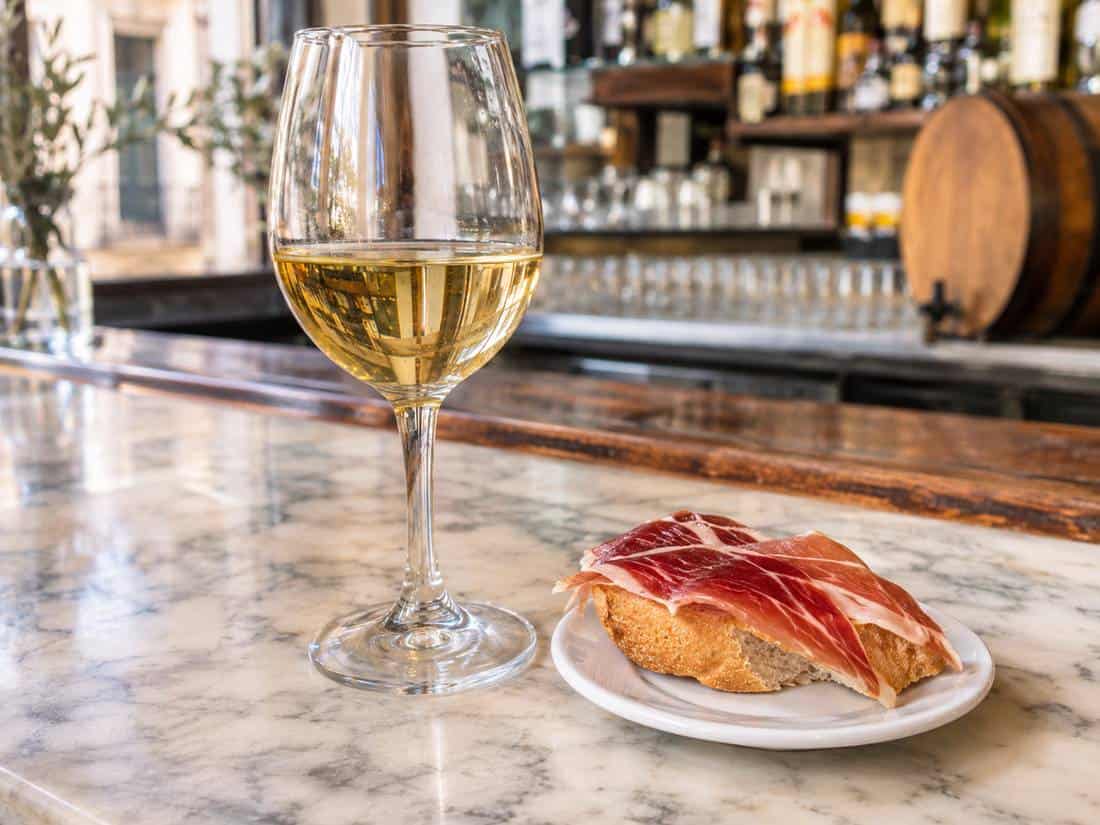
- The fly cover. Barmen in hot Andalusia put a slice of bread or ham over a glass of sherry to keep insects out. This is the most widely repeated version.
- Alfonso X. The 13th-century Castilian king, ill and told to take wine with food, is said to have ordered taverns to serve food with drink. Explore Granada says historians have looked for the decree since at least the 1980s and not found it.
- Alfonso XIII. The early 20th-century king is said to have stopped at a tavern in Cádiz, where a barman covered his sherry with ham to keep out sand or flies.
- Salt and thirst. Salty ham, cheese and olives made customers thirsty, so they bought more drinks.
Saveur adds that Cervantes, in Don Quixote, mentions llamativos, or “lures”, small bites that raise hunger or thirst. Most food historians now see tapas as a slow mix of all these habits rather than a single invention.
Why Andalusia and sherry matter to tapas food
Almost every version places the first tapas in Andalusia, the hot southern region where sherry is made. The sherry towns of Jerez de la Frontera, El Puerto de Santa María and Sanlúcar de Barrameda had a long tradition of serving small bites in bodegas while people tasted wine. A dry, salty fino or manzanilla still goes best with the same foods: ham, olives, almonds and fried fish. Our guide to sherry styles explains the wines.
The Andújar tourism office says that in the first half of the 19th century the name tapa was given to slices of ham or chorizo used to cover glasses in Andalusian bars, and that the custom spread across Spain later. After the Civil War, cheap sandwiches replaced many tapas, and they came back in the 1950s as bars multiplied.
Free tapas in Granada
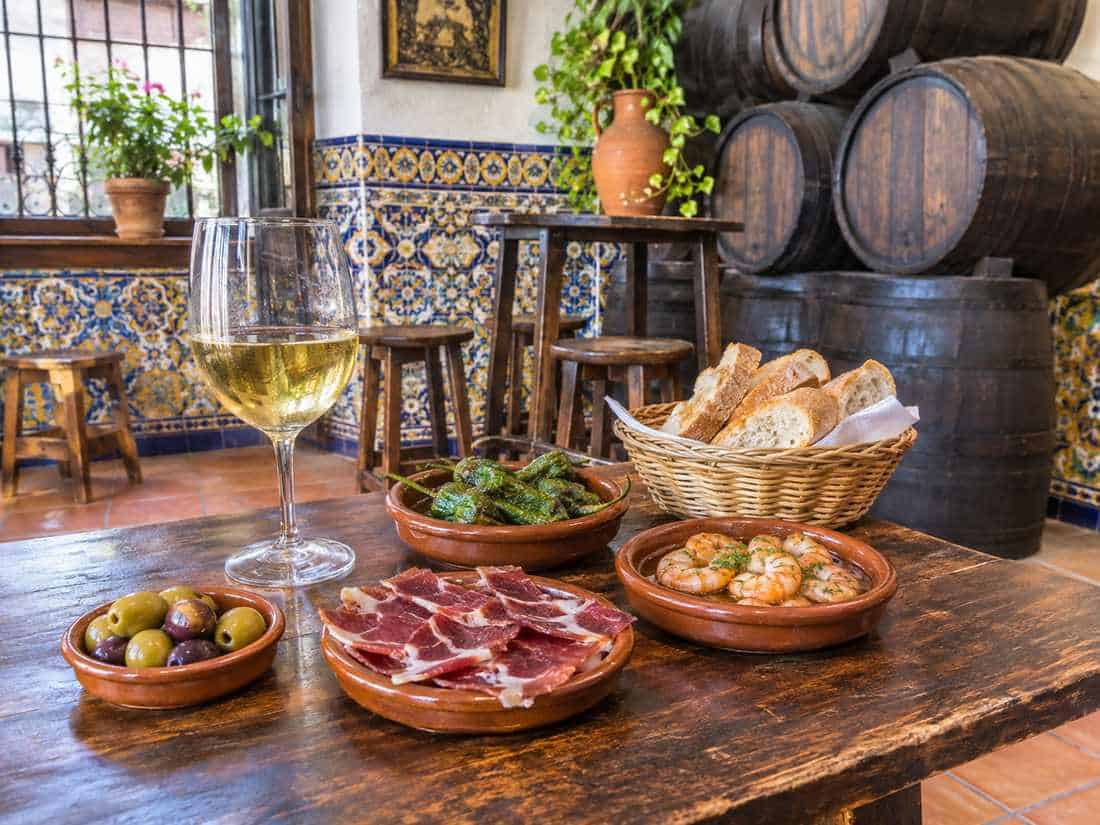
In most of Spain you now pay for tapas. Granada is the best-known exception: a small tapa still comes free with each drink, and each round brings a different dish. Explore Granada says the practice became so central to the city’s bar economy that no bar can drop it without losing customers to the one next door. USA Today 10Best links the spread of free tapas to the hardship of the 1930s, when bars helped feed their regulars, and their decline to the tourist boom after 1975.
How tapeo works
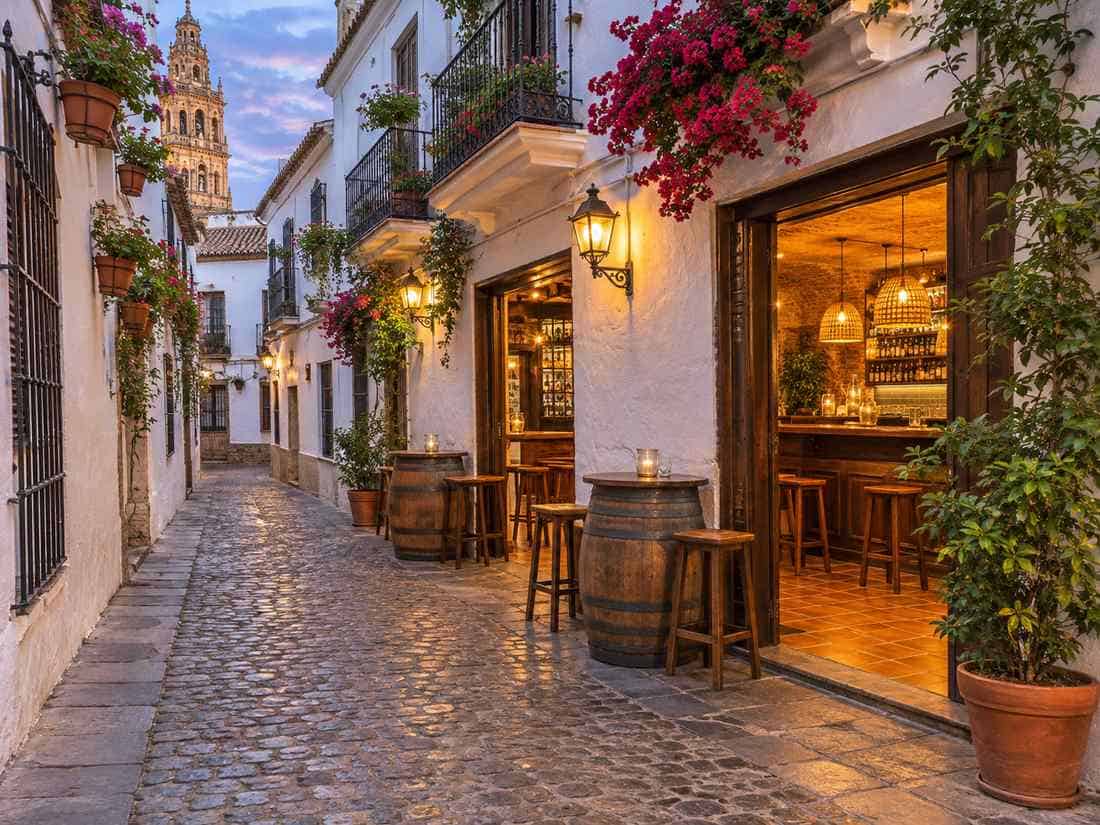
Andalucia.com describes tapeo as meeting friends in different places for drinks and conversation, and says it also includes pasear, to stroll. The habit varies by region:
- In the Basque Country, people move quickly, ordering a few pintxos and a small glass at each bar, according to Saveur.
- In Andalusia, people often stay longer in one place and make a meal of their tapas.
- In Granada, locals may spend a whole evening in one bar. Explore Granada calls the strict bar-to-bar route a visitor construct.
A simple pattern for visitors: order one drink and one or two plates, stay 20 to 40 minutes, then move on. After three or four bars you will have eaten a full dinner.
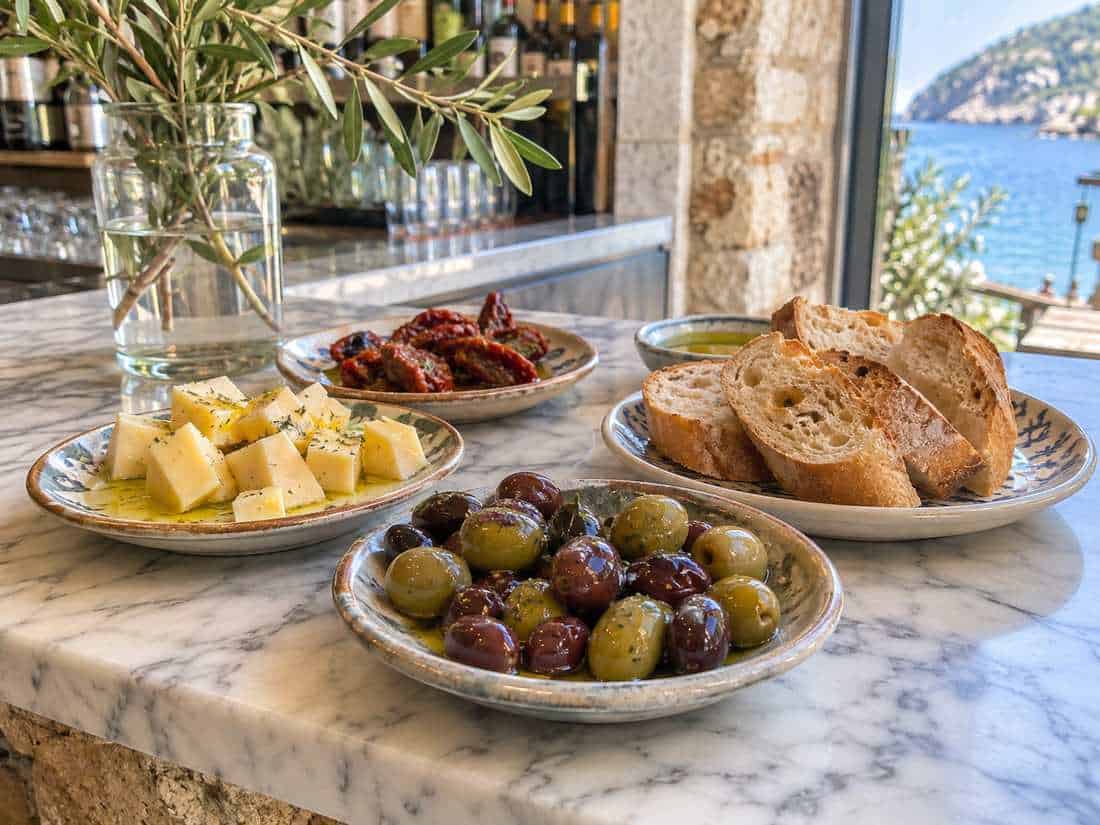
What people drink with tapas
Tapas grew up as food for drinking, so the drink matters as much as the plate. In Andalusia the traditional choice is a chilled glass of fino or manzanilla sherry, which is dry and salty enough to match ham, olives and fried fish. Elsewhere, a caña of cold draught beer is the everyday order, and red or white wine by the glass is common in Madrid, Rioja and the north. In the Basque Country, txakoli, a light and slightly sparkling white wine, is poured from a height alongside pintxos. Vermouth on tap has also returned to many bars in Madrid and Barcelona as a pre-lunch drink. Small measures are normal, because the idea is to keep moving, keep talking and keep eating. For matching ideas, see our guide to pairing tapas with sherry, wine and beer.
Tapas etiquette
- Stand at the bar if it is busy; tables may cost more.
- Order small and often rather than all at once.
- Share plates. Tapas are meant for the table.
- Eat late. Many Spaniards go for tapas from about 8pm and dine after 9pm.
- Pay at the end. The bar usually keeps track of what you ordered.
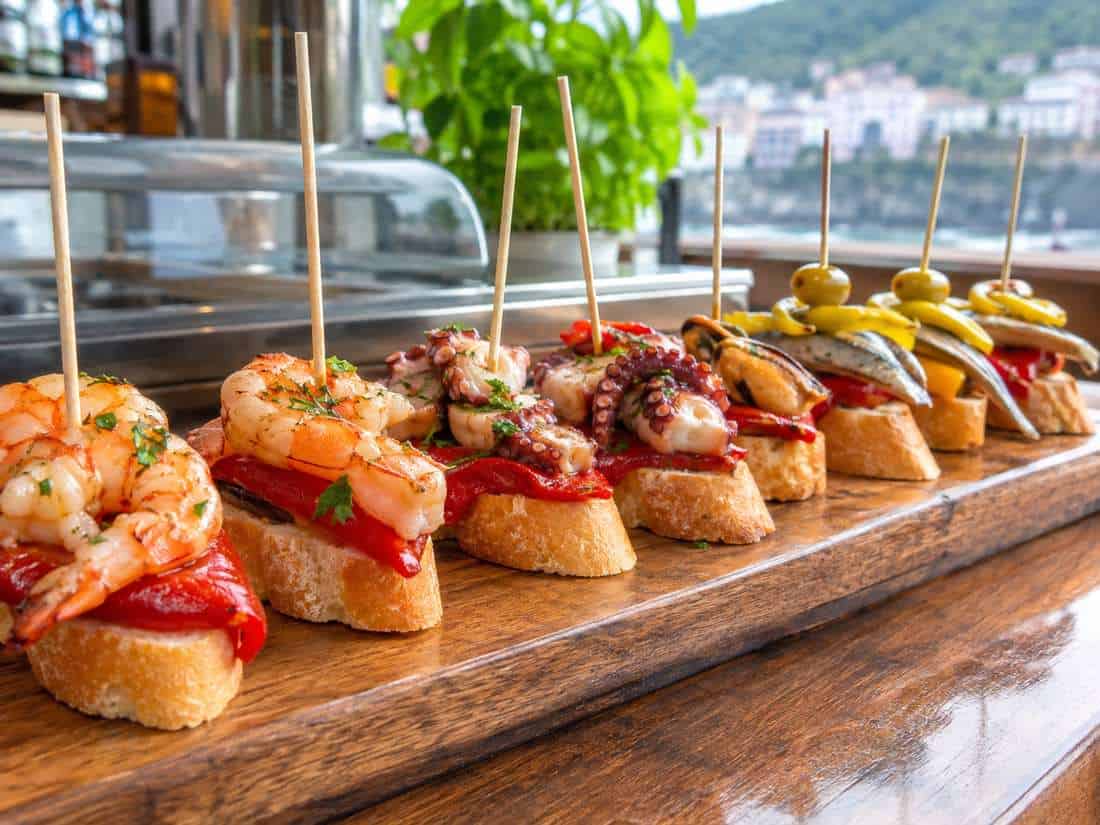
Tapas food around the world
From the 2000s, tapas bars opened in London, New York and Asian cities, often with local twists. Hong Kong’s Ship Street, for example, had the tapas bars 22 Ships and Ham & Sherry. The format of small, shared plates with a drink has since become one of the most copied ideas in restaurant design.
Key takeaways
- Tapa means lid or cover, from the Spanish verb tapar.
- The royal origin stories, including Alfonso X’s decree, are not documented.
- Tapas are linked with Andalusia and the sherry towns.
- Granada still serves a free tapa with each drink.
- Tapeo means moving between bars for drinks, food and conversation.
Common questions
Where did tapas originate?
Most accounts point to Andalusia in southern Spain, by the 19th or early 20th century.
Did a king invent tapas?
Stories credit Alfonso X and Alfonso XIII, but no historical record proves either.
What is tapeo?
Going out for tapas: drinks and small plates with friends, often at several bars in one evening.
Why are tapas free in Granada?
It is a long local custom that bars keep up to compete for customers.
What time do Spaniards eat tapas?
Often from about 8pm, before a late dinner, and at lunchtime at weekends.
How we put this together: the history comes from the regional tourism and food sources listed below. Origin stories are given as legends unless a source documents them. Checked in November 2026.