
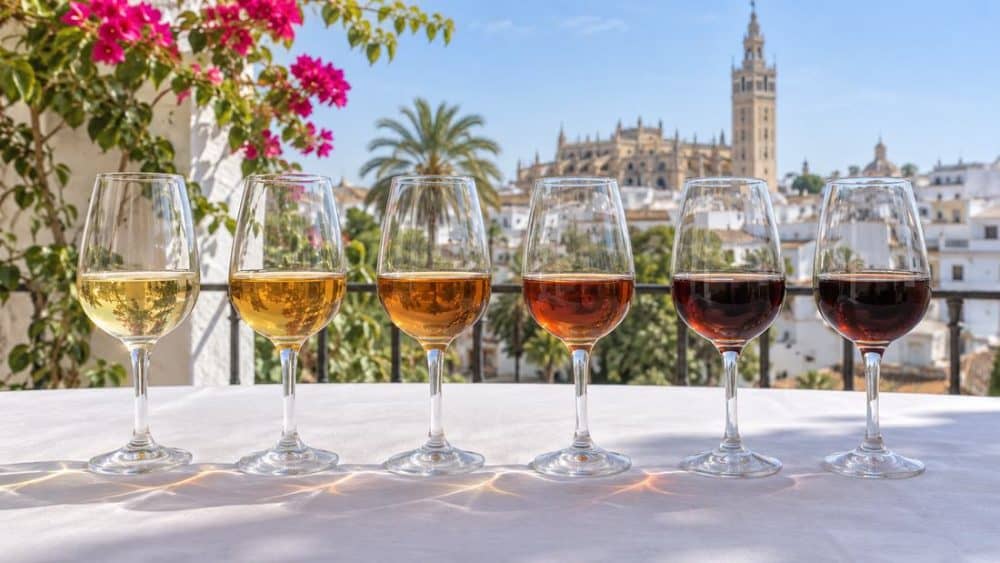
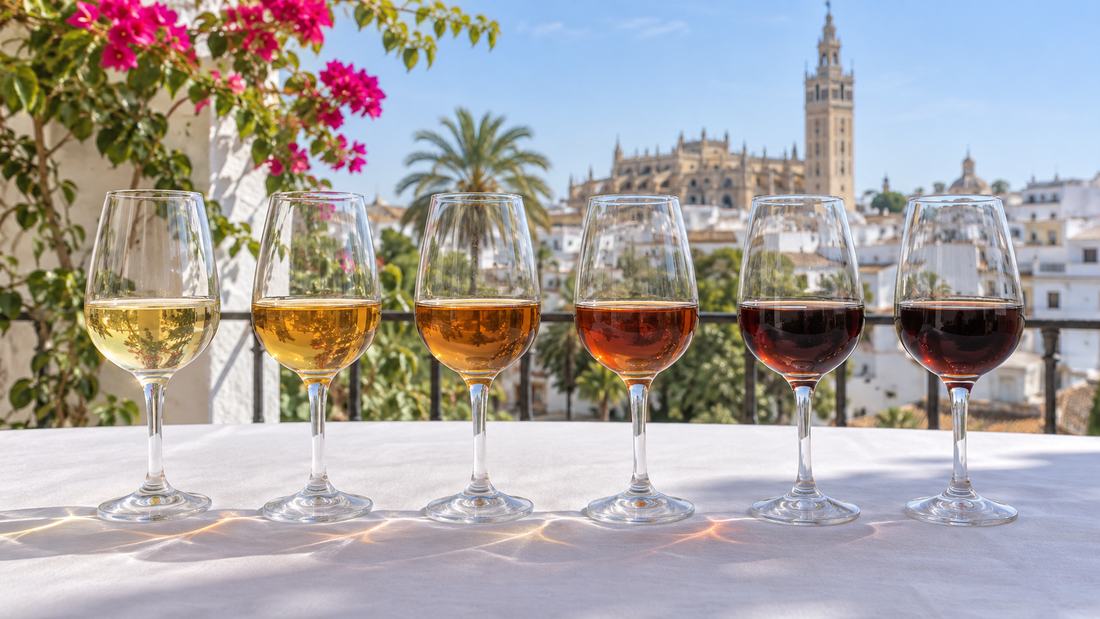
In short: Sherry is fortified wine from the Jerez region of Andalusia, made mostly from the Palomino grape. Dry styles split by how they age. Fino and manzanilla age under a layer of yeast called flor, which keeps them pale and fresh. Oloroso ages without flor, in contact with air, so it turns dark and nutty. Amontillado and palo cortado start under flor and finish with air. Sweet styles include Pedro Ximénez, moscatel and cream. All are aged in a solera system of barrels for at least two years on average.
Sherry has a reputation as a sweet drink for grandmothers, but most of it is bone dry and one of the best wines for food. The styles can be confusing, because the names describe how the wine aged rather than the grape. This guide explains sherry styles, how each is made and how to serve them. It was written in November 2026. For food matches, see our guide to pairing tapas with sherry, wine and beer.
Some terms. Flor is a film of yeast that grows on the wine. Biological ageing means ageing under flor; oxidative ageing means ageing in contact with air. A solera is a system of barrels where younger wine refreshes older wine. DO means denominación de origen, a protected place of origin.
Where sherry comes from
Sherry comes from the province of Cádiz in southern Spain. Jancis Robinson notes that the Jerez-Xérès-Sherry denomination dates from 1933, one of the first in Spain. For decades, sherry had to be aged in the “sherry triangle” of Jerez de la Frontera, El Puerto de Santa María and Sanlúcar de Barrameda. The Sherry Wine Council explains that new rules expanded the ageing zone from three towns to ten municipalities across the production area.
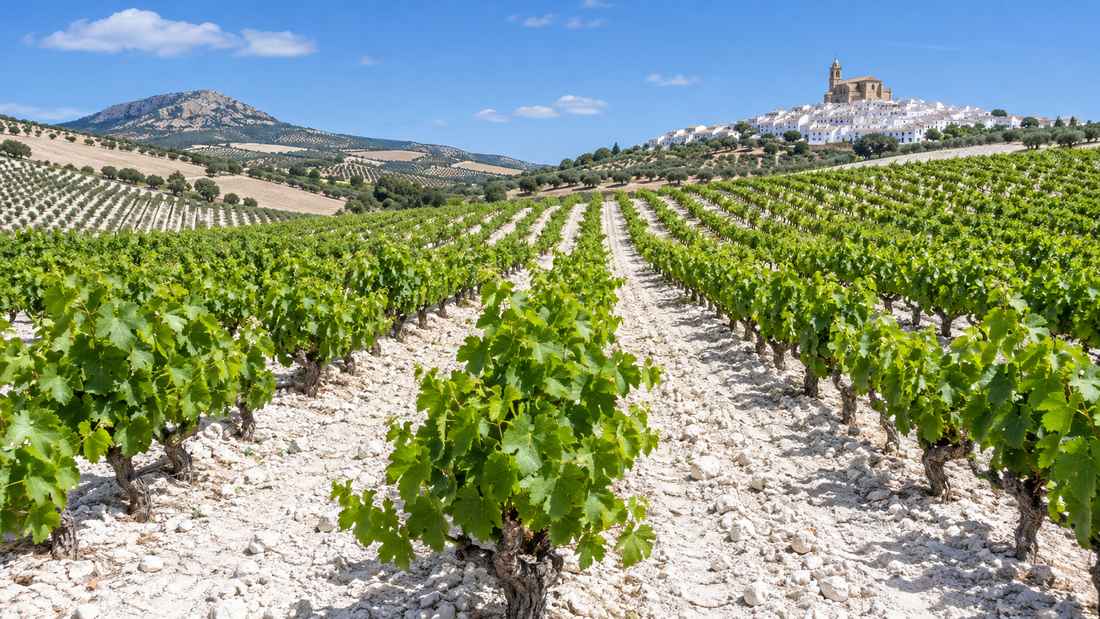
The key grape is Palomino, grown on white chalky soil called albariza. Pedro Ximénez and moscatel are used mainly for sweet wines.
How sherry is made
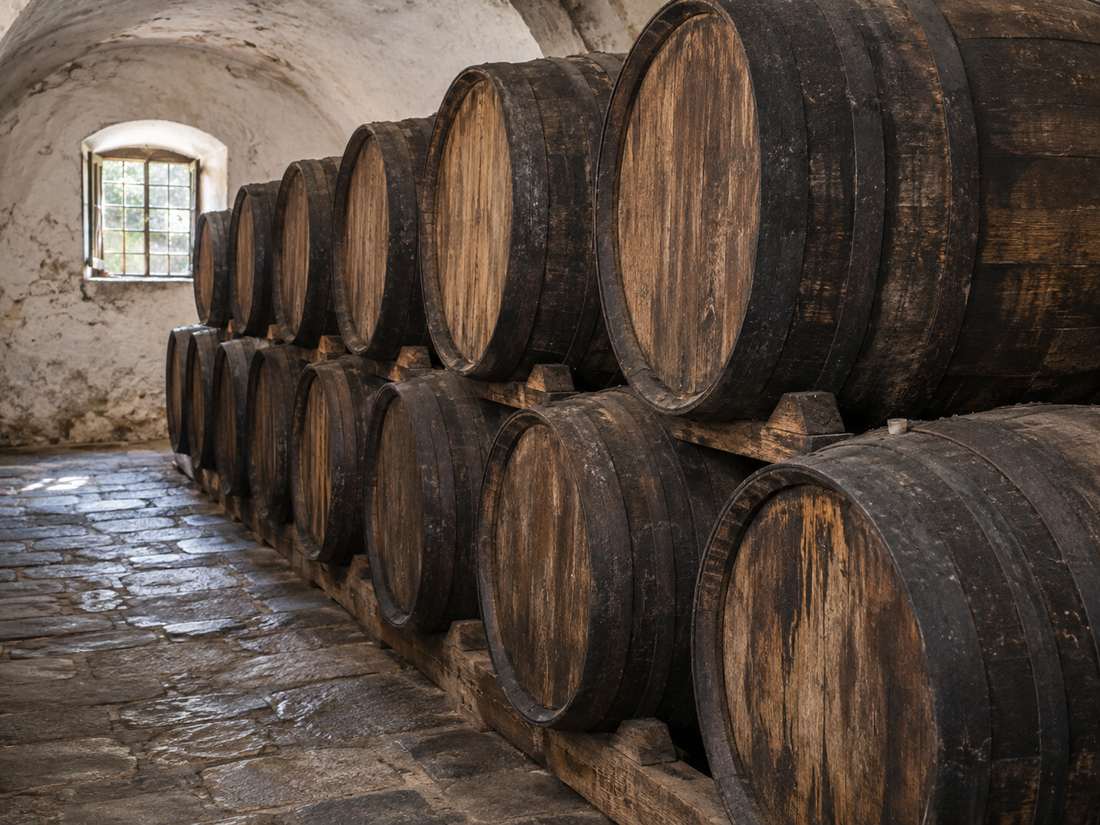
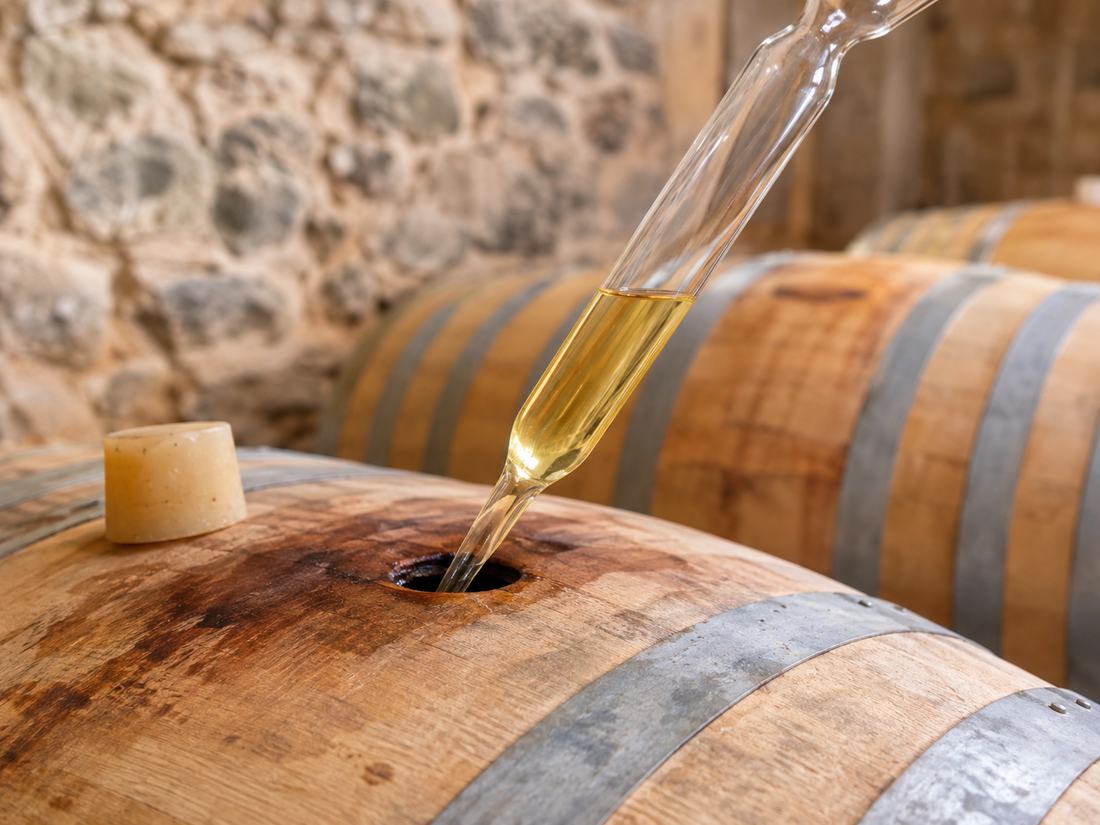
After fermentation, the base wine is fortified with grape spirit. Wine.com explains that wines meant for flor are fortified to about 15% alcohol, a level where the yeast can survive, while wines meant for oxidative ageing are fortified to 17% or more, which kills flor. The wine then goes into the solera. Each year some wine is taken from the oldest barrels for bottling, and they are topped up from the next oldest, and so on. Wine with Seth notes that DO rules require an average ageing of at least two years.
Dry sherry styles
Fino
Pale, light and very dry, aged entirely under flor. It tastes of almonds, bread dough and salt. Serve it well chilled, and drink it soon after opening, as it fades quickly.
Manzanilla
A fino-style sherry that can only be aged in Sanlúcar de Barrameda, where sea air keeps the flor thick all year. It is even lighter and more saline than fino. Manzanilla gained its own DO, Manzanilla-Sanlúcar de Barrameda, in 1964, according to Jancis Robinson.
Amontillado
Starts life as a fino, then the flor dies or is killed by extra fortification, and the wine continues ageing in contact with air. The result is amber, nutty and dry, with both freshness and depth.
Palo cortado
A rare style that starts under flor but develops more like an oloroso, combining the delicate nose of an amontillado with the body of an oloroso. Winemakers describe it as hard to make on purpose.
Oloroso
Fortified to 17% or more from the start and aged only with air. It becomes dark, rich and nutty, with notes of walnut, leather and dried fruit, but it is still dry.
Sweet sherry styles
- Pedro Ximénez: made from sun-dried grapes, very dark and sweet, with raisin and fig flavours.
- Moscatel: sweet and floral, from muscat grapes.
- Cream: a blend of oloroso and a sweet wine such as Pedro Ximénez.
- Pale cream: a fino-type wine lightly sweetened.
- Medium: an amontillado-type wine with some sweetness.
Sherry styles at a glance
| Style | Ageing | Colour | Taste |
|---|---|---|---|
| Fino | Under flor | Pale straw | Dry, almond, salty |
| Manzanilla | Under flor in Sanlúcar | Very pale | Dry, light, saline |
| Amontillado | Flor, then air | Amber | Dry, nutty |
| Palo cortado | Flor, then air | Amber to mahogany | Dry, complex |
| Oloroso | Air only | Mahogany | Dry, rich, walnut |
| Pedro Ximénez | Air | Almost black | Very sweet, raisin |
Labels worth knowing
A few words on the label tell you more about what is in the bottle:
- En rama: fino or manzanilla bottled with little or no filtering, so it tastes closer to the wine in the barrel. It is usually released in spring and is best drunk young.
- VOS and VORS: age-certified sherries. VOS (Very Old Sherry) has an average age of at least 20 years, and VORS (Very Old Rare Sherry) at least 30 years, checked by the regulatory council. They are always amontillado, palo cortado, oloroso or Pedro Ximénez.
- 12 and 15 years: shorter age statements also approved by the council.
- Bottling date: for fino and manzanilla, a recent bottling date matters more than any vintage, because freshness fades in the bottle.
When in doubt, a reliable house fino or manzanilla from a well-known producer is a safe first bottle.
How to serve sherry
- Serve fino and manzanilla well chilled, like a white wine.
- Serve amontillado, palo cortado and oloroso cool, slightly below room temperature.
- Use a white wine glass rather than a tiny copita, so the aroma can open up.
- Keep open fino and manzanilla in the fridge and finish within a few days.
- Darker styles keep longer after opening because they are already oxidised.
Decanter publishes award-winning sherries each year around International Sherry Week, a useful starting list for buying.
Sherry with food
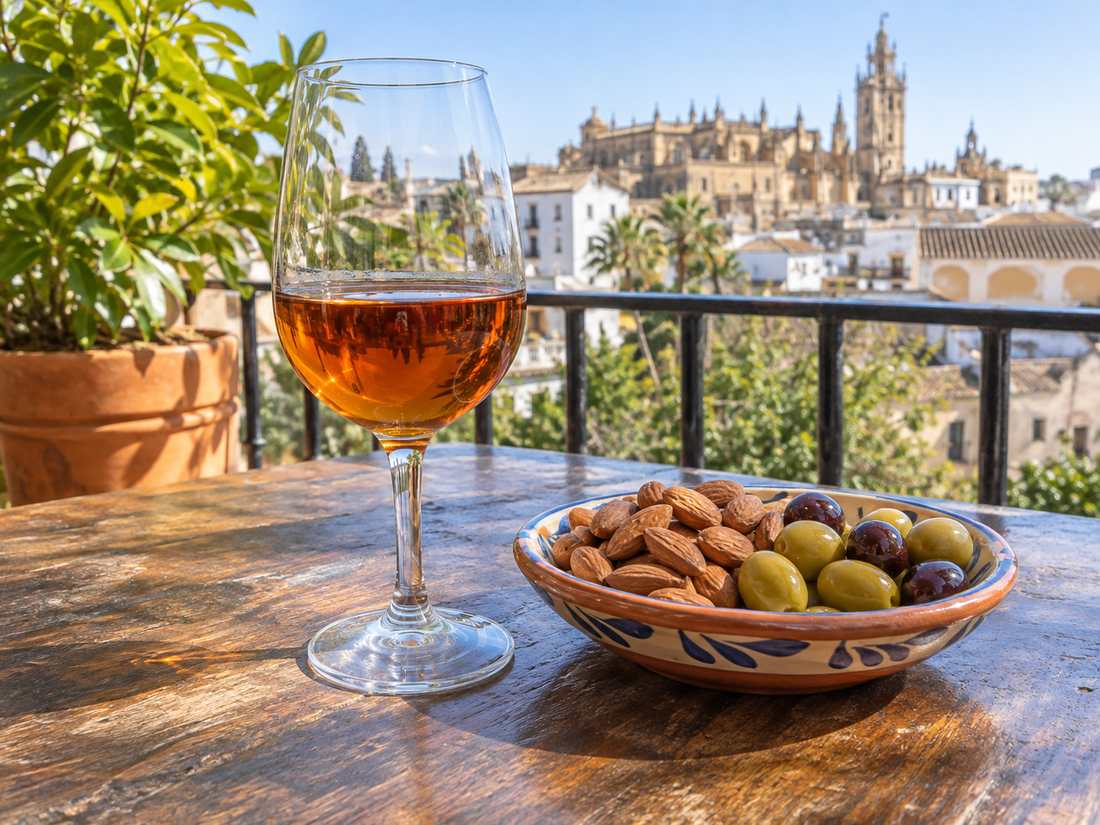
The Sherry Wine Council matches manzanilla with chilled soups, prawns and fried fish, amontillado with tuna, artichokes and asparagus, oloroso with hearty stews, and Pedro Ximénez with dessert. Fino goes with jamón; see our guide to jamón ibérico labels. In Hong Kong, the Ship Street bar Ham & Sherry built a whole menu around these pairings.
Key takeaways
- Sherry is fortified wine from Jerez in Andalusia, mostly from Palomino grapes.
- Fino and manzanilla age under flor; oloroso ages with air.
- Amontillado and palo cortado combine both kinds of ageing.
- All sherry is aged in a solera for at least two years on average.
- Most sherry is dry; Pedro Ximénez and cream are the sweet styles.
Common questions
Is sherry sweet?
Most is dry. Only Pedro Ximénez, moscatel and cream-style sherries are sweet.
What is the difference between fino and manzanilla?
Manzanilla is a fino-style wine aged only in Sanlúcar de Barrameda, and is usually lighter and saltier.
What is flor?
A layer of yeast that grows on the wine and protects it from air.
Should sherry be refrigerated after opening?
Yes for fino and manzanilla; darker styles keep longer but also benefit from cool storage.
What is a solera?
A system of barrels where wine is drawn from the oldest and topped up with younger wine.
How we put this together: production rules and style definitions come from the Sherry Wine Council and the wine references listed below. Checked in November 2026.