
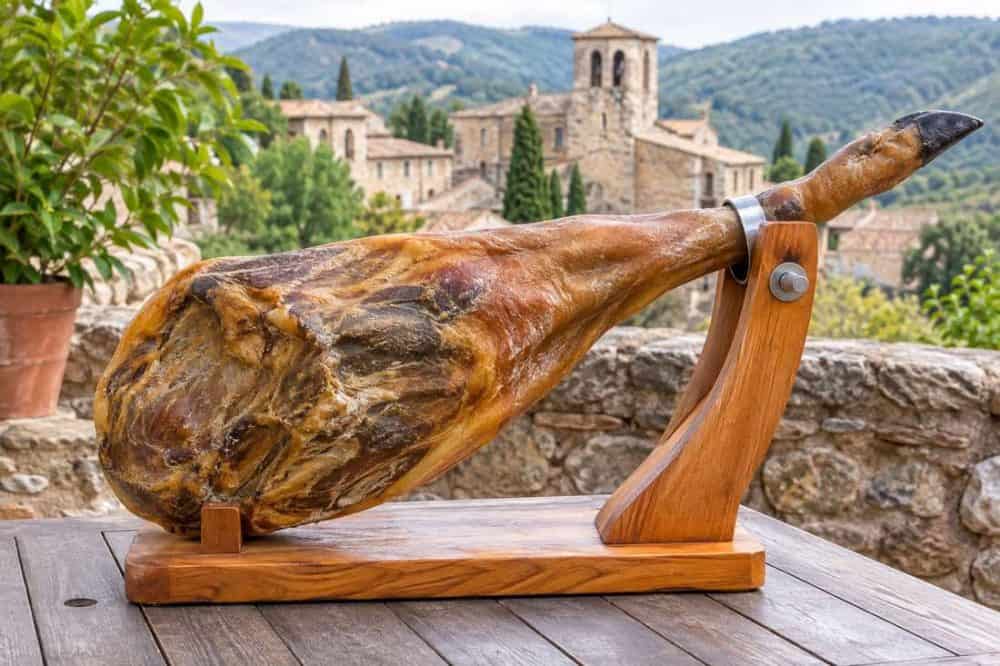
In short: Since 2014, Spain’s quality standard for Iberian pork, Real Decreto 4/2014, has required every jamón ibérico leg to carry a coloured seal. Black means de bellota 100% ibérico: purebred Iberian pigs fattened on acorns. Red means de bellota ibérico: acorn-fed pigs that are at least 50% Iberian. Green means de cebo de campo ibérico: pigs raised outdoors on feed and pasture. White means de cebo ibérico: pigs raised on farms on feed. Only black-label ham may be called “pata negra”.
Jamón ibérico is one of the most prized foods in Spain, and also one of the most confusing to buy. Prices range widely, and the names on the labels sound alike. This guide explains jamón ibérico labels, what each seal means and how to choose. It was written in November 2026. For what to drink with it, see our guide to sherry styles.
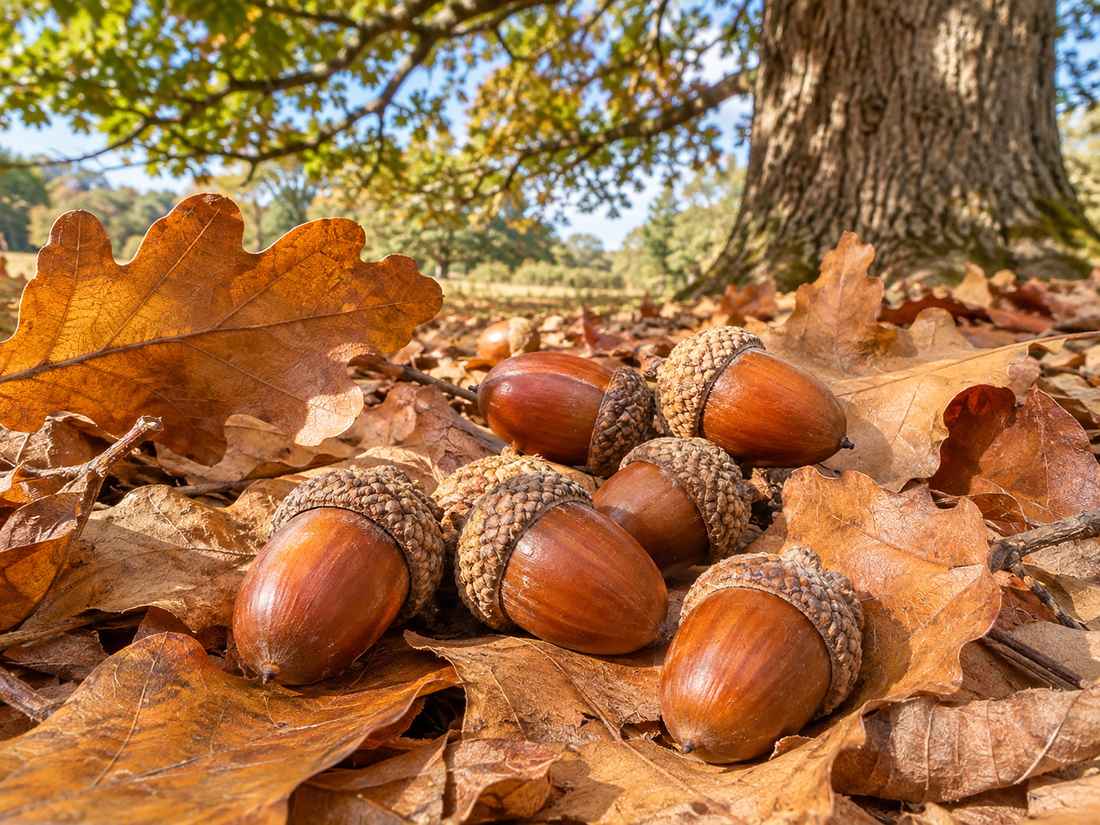
Some terms. Ibérico refers to the Iberian pig breed. Bellota means acorn. Cebo means feed. Montanera is the autumn and winter season when pigs graze on acorns in the dehesa, the oak pastures of western Spain. Paleta is the shoulder, smaller and cheaper than the jamón, the hind leg.
The 2014 quality standard
Spain’s quality standard for Iberian ham, shoulder and loin is set by Real Decreto 4/2014, published in the official state bulletin. It sets out how products must be named by two factors: the pig’s breed (the percentage of Iberian genetics) and its diet and management. Traza explains that the rule introduced the coloured seals so buyers could tell the grades apart at a glance.
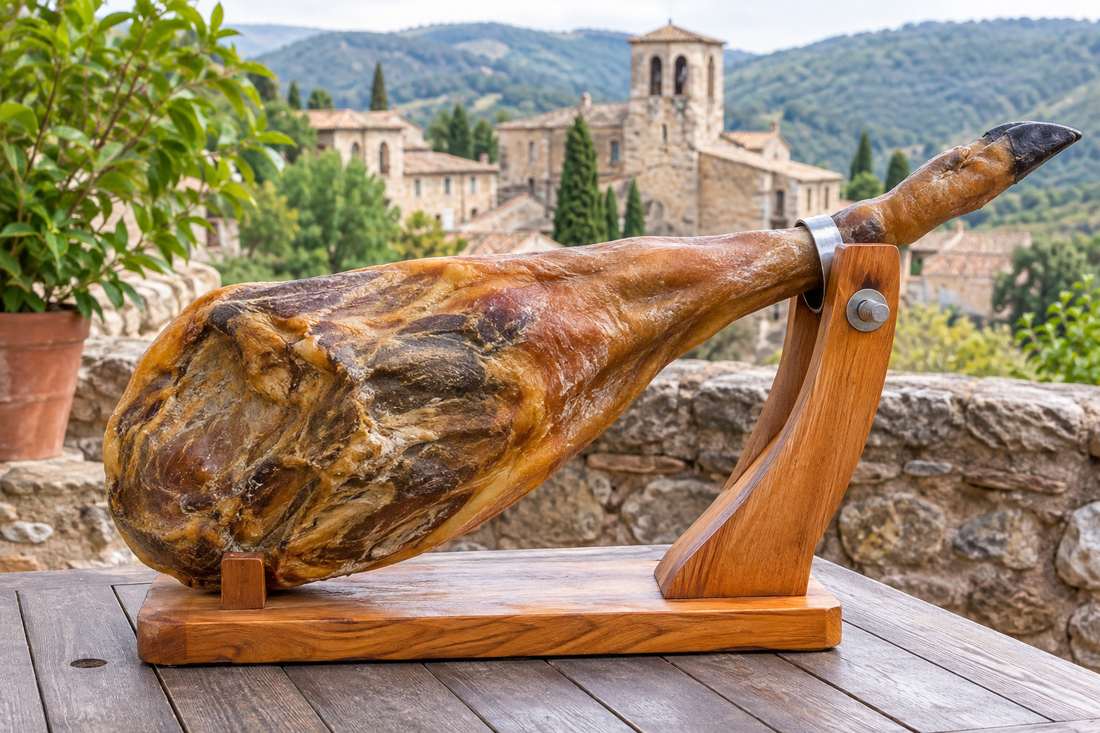
The four seals
Black label: jamón de bellota 100% ibérico
From purebred Iberian pigs, both parents registered as Iberian, fattened during the montanera on acorns and pasture in the dehesa. This is the top grade and the only one that may use the term “pata negra”, according to Jamón Gourmet.
Red label: jamón de bellota ibérico
Also acorn-fed in the montanera, but from pigs that are crossbred, at least 50% or 75% Iberian, usually with Duroc. The label must state the percentage.
Green label: jamón de cebo de campo ibérico
From pigs raised outdoors, with access to pasture, and fed mainly on cereals and legumes. Plain Spain notes the pigs spend at least their final 60 days outdoors.
White label: jamón de cebo ibérico
From pigs raised on farms and fed on cereals and legumes. It is the most affordable Iberian ham and still different from ordinary jamón serrano, which comes from white pig breeds.
Curing times
Iberian ham must also cure for a minimum time, depending on weight and grade. Fisan and other producers give minimums of around 14 months or more for bellota hams. In practice, top black-label legs are often cured for three years or longer. Longer curing deepens the flavour and turns the fat soft and glossy.

The labels at a glance
| Seal | Name | Breed | Diet |
|---|---|---|---|
| Black | De bellota 100% ibérico | 100% Iberian | Acorns and pasture in the montanera |
| Red | De bellota ibérico | 50% or 75% Iberian | Acorns and pasture in the montanera |
| Green | De cebo de campo ibérico | 50%, 75% or 100% Iberian | Feed and pasture, outdoors |
| White | De cebo ibérico | 50%, 75% or 100% Iberian | Feed, on farms |
What “pata negra” really means
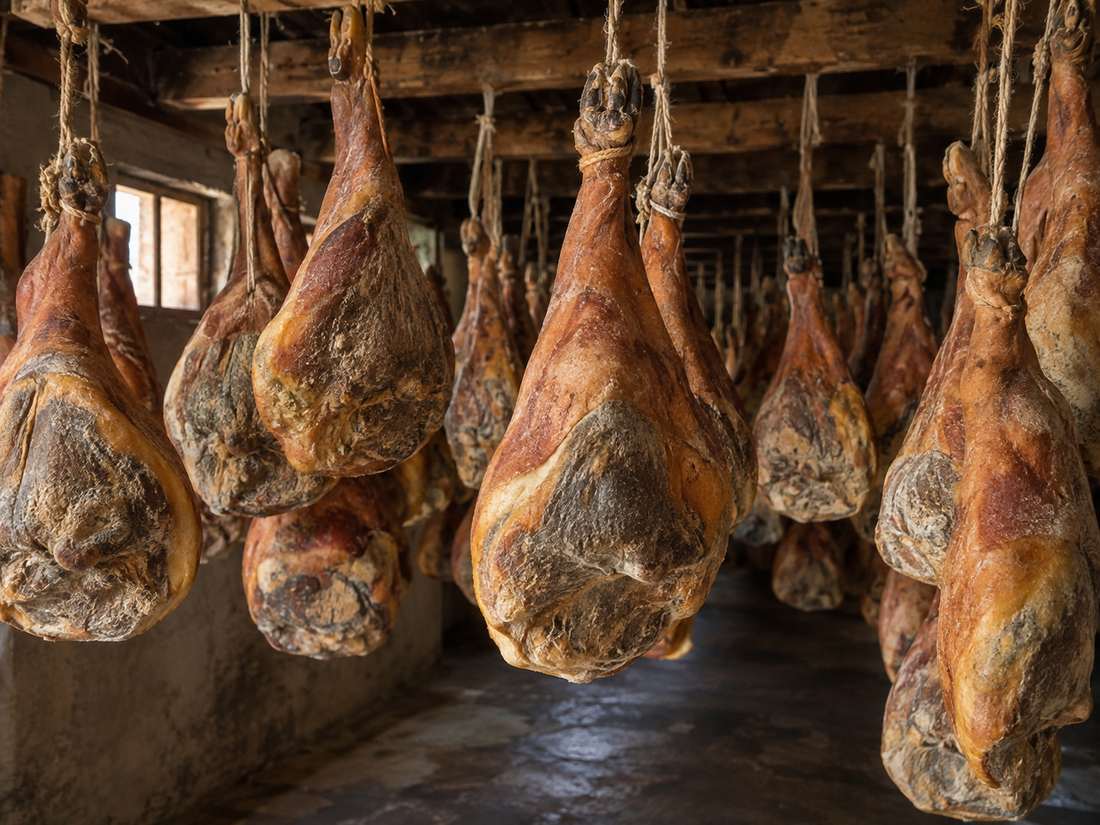
Pata negra means “black hoof”, because many Iberian pigs have dark hooves. For years the phrase was used loosely on any Iberian ham. Under the 2014 rule, only black-label 100% Iberian acorn-fed ham may use it. A dark hoof alone proves nothing, since crossbred pigs can have dark hooves too, as Wikipedia’s jamón ibérico article notes.
Jamón ibérico vs jamón serrano
Jamón serrano is made from white pig breeds, usually raised on farms and cured for a shorter time. It is cheaper and milder. Jamón ibérico comes from Iberian pigs, which store more fat in their muscle, giving marbled, richer meat. Both are good; they are different products.
How to buy and serve
- Check the coloured seal on the leg or the packet label.
- Read the full name: “bellota”, “cebo de campo” and “cebo” are legally defined.
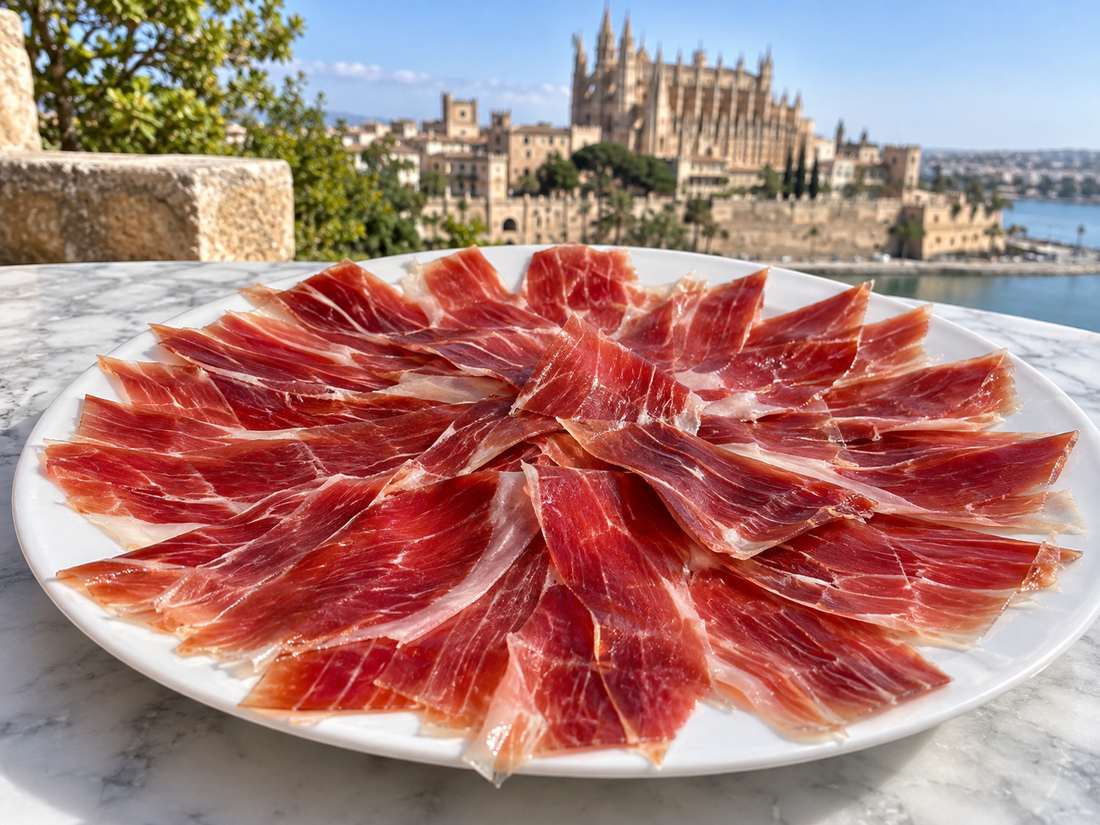
- For tasting, buy hand-cut slices; machine-cut slices are thinner but less textured.
- Serve at room temperature, around 20 to 25°C, so the fat softens.
- Eat it on its own or with bread; it does not need anything else.
- Drink a chilled fino or manzanilla with it, the classic match. See our guide to pairing tapas with sherry, wine and beer.
Carving a whole leg
Buying a whole leg is good value for a party or a household that eats ham often, but it needs a stand and a long, thin, flexible knife. Clamp the leg in the stand with the hoof pointing up and start on the wider side, the maza, for a large group, or on the narrower side, the babilla, if the ham will be eaten slowly over weeks. Remove the hard outer skin and the thick yellow fat with a short knife until you reach clean, pink meat. Then cut slices away from your body, as thin as possible and about the length of a finger, so each one melts on the tongue. Keep a little white fat on each slice for flavour. When you finish for the day, lay some of the removed fat back over the cut face to stop it drying out. In Spain, skilled carvers, called cortadores, are often hired for weddings and parties, and carving contests are held across the country.
Jamón in tapas culture
A plate of jamón is one of the first things ordered in a Spanish tapas bar, and in many bars a leg sits on the counter for carving. Our list of the best Spanish tapas food shows where it fits in a meal, and the story of Hong Kong’s Ham & Sherry shows how one bar built its whole identity around hand-carved ham and sherry.
Key takeaways
- Real Decreto 4/2014 sets the names and coloured seals for Iberian ham.
- Black is 100% Iberian and acorn-fed; red is crossbred and acorn-fed.
- Green is raised outdoors on feed and pasture; white is farm-raised on feed.
- Only black-label ham may be called pata negra.
- Serve at room temperature, thinly sliced, with a dry sherry.
Common questions
What does the black label on jamón ibérico mean?
It means de bellota 100% ibérico: purebred Iberian pigs fattened on acorns.
Is pata negra the same as jamón ibérico?
No. Pata negra may only be used for black-label 100% Iberian acorn-fed ham.
What is the difference between bellota and cebo?
Bellota pigs eat acorns in the montanera; cebo pigs eat feed.
Why is jamón ibérico so expensive?
The pigs need large areas of oak pasture, grow slowly and the hams cure for years.
How should jamón be stored after opening?
Cover the cut face with a piece of its own fat and keep it in a cool, dry place.
How we put this together: label rules come from Real Decreto 4/2014 and the producer and reference guides listed below. Check the current standard before buying for trade. Checked in November 2026.